
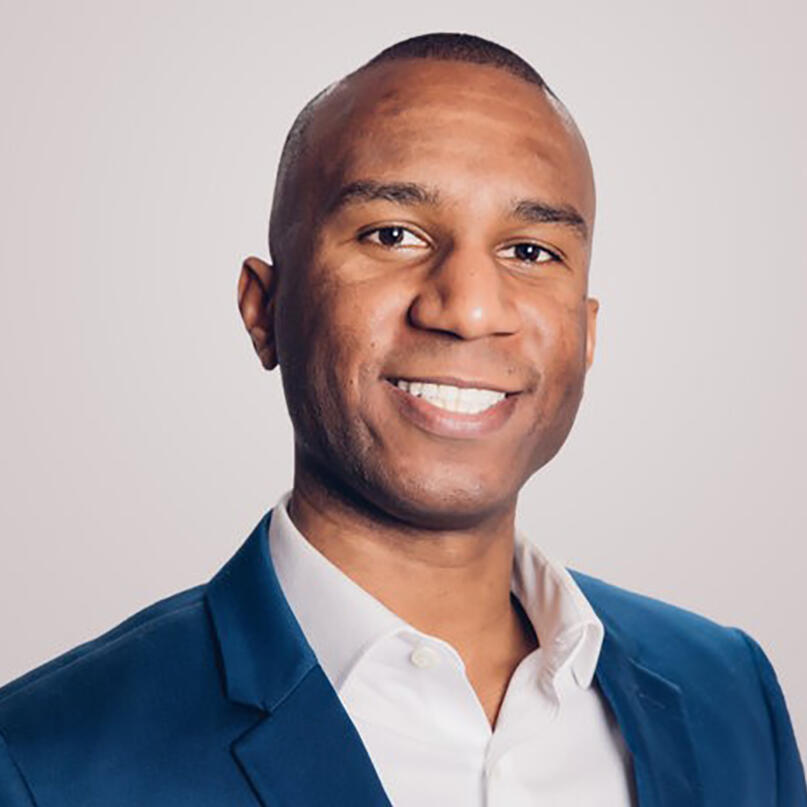
Wayne Lawrence, Dr.P.H., M.P.H.

Biography
Dr. Lawrence earned his Dr.PH. in epidemiology from the State University of New York at Albany, where he was also awarded the Presidential Doctoral Fellowship for research training in health disparities within the Center for the Elimination of Health Disparities. He joined the DCEG’s Metabolic Epidemiology Branch (MEB) as a postdoctoral fellow through the Cancer Prevention Fellowship Program in 2020 and was promoted to research fellow in 2022. In 2026, Dr. Lawrence was selected as an Earl Stadtman tenure-track investigator.
Dr. Lawrence has received numerous awards for his work, including NCI Cancer Prevention Fellowship Program Merit Award, which recognizes postdoctoral fellows with the ability to rise to the highest level of science and leadership, and the DCEG Outstanding Paper Award, which is awarded to a fellow in the division whose published study was voted the highest for innovation and impact. In 2022, he was elected to a three-year term on the American Association for Cancer Research (AACR) Associate Member Council, which develops programs that address the needs of early-career scientists and advises leadership on issues of concern to the next generation of cancer researchers
Research Interests
Dr. Lawrence’s research centers on applying life-course and social epidemiologic methods to investigate how neighborhood economic environments and psychosocial stressors drive disparities in cancer risk and survivorship, aiming to identify potential interventions. He also utilizes descriptive analyses to track emerging national trends in cancer incidence and mortality, quantifying the contribution of area-level risk factors to these underlying patterns and disparities.
Neighborhood Economic Environment, Access to Housing, and Cancer
Extensive research has linked neighborhood social and economic attributes to inequities in healthcare access, disease burden, and life expectancy, with a growing body of studies demonstrating a profound impact on cancer outcomes. Because residential areas in the United States are sharply patterned by socioeconomic status, neighborhood environments serve as critical drivers of cancer disparities through the unequal spatial distribution of resources.
Dr. Lawrence is leading research investigating how the neighborhood economic environment influence disparities in cancer survivorship, including the impact of local area access to housing, housing cost burden, and distance to medical care. He is also examining how receipt federal housing assistance affects short- and long-term cancer survivorship among low-income patients. Additionally, Dr. Lawrence is identifying critical periods across the life course during which the neighborhood environment has the greatest influence on cancer risk.
Identifying Emerging Trends and Disparities in Cancer Incidence and Mortality
Dr. Lawrence employs rigorous methodology to investigate recent temporal trends and population differences in cancer incidence and mortality nationwide. By integrating data from U.S. Cancer Registries, the U.S. Census Bureau, the Department of Housing and Urban Development (HUD), and the National Center for Health Statistics (NCHS), his research examines how area-level risk factors drive emerging patterns in cancer burden.
Dr. Lawrence’s research also targets the rising incidence of early-onset cancers. Specifically, he examines emerging trends in early-onset malignancies to identify disproportionately burdened populations—such as those in rural areas—and investigate the potential macro-level contributors driving these shifts.
Dr. Lawrence serves as Co-Chair of the Social and Structural Determinants of Health Working Group of the Connect for Cancer Prevention Study. In this role, he leads identifying measures to include in the study related to socioenvironmental and economic conditions across the life course that affect health and contributes to disparities in cancer risk, quality of life, and long-term survival.
Information for Journalists
To request an interview with a DCEG investigator, please complete this form: Request For Comment | HHS.gov.