
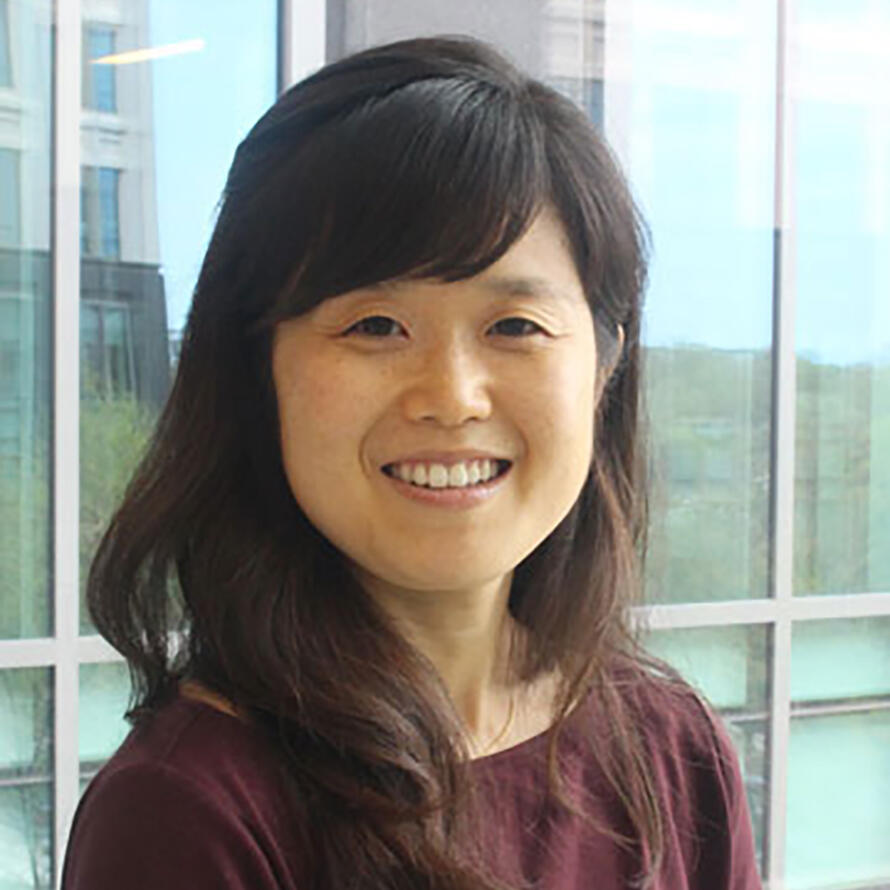
Yukiko Yano, Ph.D., M.P.H.
Biography

Dr. Yano received a Ph.D. in environmental health sciences from the University of California, Berkeley, and an M.P.H. in environmental health from Emory University. She joined DCEG in 2019 as a visiting fellow within the Metabolic Epidemiology Branch (MEB), and she was selected as an NIH Independent Research Scholar and promoted to a Research Fellow in 2022. In 2026, Dr. Yano was selected as an Earl Stadtman tenure-track investigator. Her scientific achievements have been recognized with several awards, including the NCI Director’s Innovation Career Development Award, the NIMHD Coleman Award, and multiple DCEG Intramural Research Awards.
Research Interests
Dr. Yano’s research program focuses on integrating molecular epidemiology, field epidemiology, and population sciences to better understand the etiology of upper aerodigestive tract (UADT) cancers. Her work aims to reduce the burden of UADT cancers among disproportionately affected populations in understudied, resource-limited settings.
Etiology of UADT cancers
Cancers of the UADT, including the head and neck, esophagus, and stomach, comprise some of the most common cancers in the world, with ~2.5 million incident cases collectively, per year. Some of the highest burdens of UADT cancers are in resource-limited populations, where these cancers are often diagnosed at an advanced stage and effective screening and treatment are not widely available. While prevention remains key, our understanding of the etiology of these cancers remains incomplete.
Although head and neck cancers are phenotypically similar and share some major risk factors (e.g., exposure to tobacco, alcohol, and betel quid), there are also important etiologic differences among tumors arising in different anatomic subsites that have not been fully recognized. Using population-based studies and biomarker analyses, Dr. Yano’s work focuses on further uncovering etiologic differences across head and neck cancers, particularly within the oral cavity, to identify novel etiologic factors and mechanisms driving these cancers.
Alcohol is an important cause of cancers in the UADT. While the many health risks of heavy alcohol consumption are well-defined, the health effects of low to moderate drinking remain incompletely understood. Using various high-throughput omics methods, Dr. Yano’s research program addresses precise estimation of risk effects from alcohol on specific UADT cancers by developing and using alcohol biomarkers that will lead to a better understanding of the mechanisms of carcinogenesis.
Dr. Yano’s work also involves field epidemiology to identify novel risk factors and address emerging hypotheses related to UADT cancers. She works with other MEB investigators to conduct field studies in East Africa, a region with particularly high incidence of esophageal squamous cell carcinoma. Dr. Yano is a member of the African Esophageal Cancer Consortium (AfrECC) and currently serves as the co-chair of the Etiology Working Group.
Human microbiome and UADT cancers
Another key area of Dr. Yano’s research program is the human microbiome, which has been implicated in the etiology of UADT cancers directly as well as through the metabolism of alcohol. She conducts methodologic work to improve existing techniques and to develop novel methods to characterize microbial exposures impacting human health. Using rigorous methods, Dr. Yano’s work aims to understand the role of the human microbiome in the etiology of UADT cancers.
Information for Journalists
To request an interview with a DCEG investigator, please complete this form: Request For Comment | HHS.gov.