
Remembering Joseph F. Fraumeni, Jr., Founder of the NCI Division of Cancer Epidemiology and Genetics
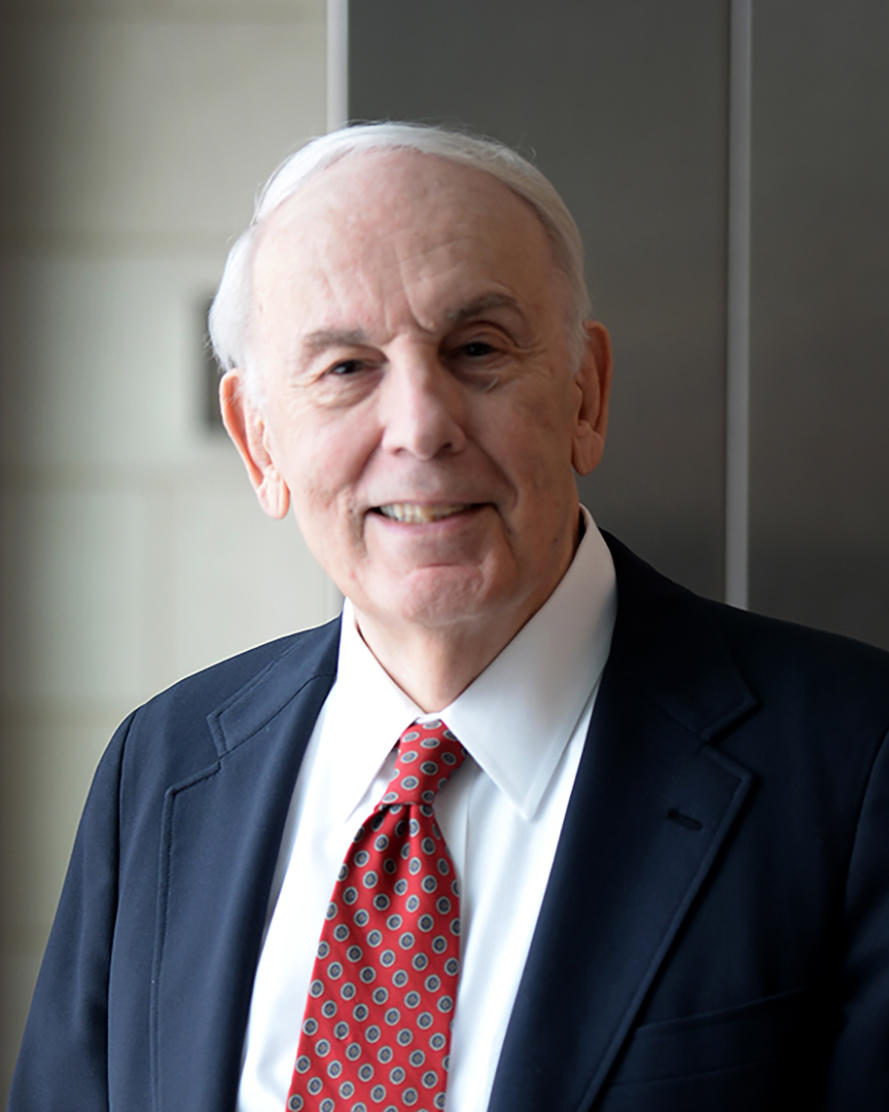
The Division of Cancer Epidemiology and Genetics (DCEG) mourns the loss of Joseph F. Fraumeni, Jr., M.D., one of the world’s foremost cancer epidemiologists, who passed away on Monday, June 22, 2026, at the age of 93. A visionary scientist, physician, mentor, and leader, Dr. Fraumeni transformed the field of cancer epidemiology, founded DCEG, and inspired generations of researchers whose work continues to advance understanding of cancer causes and prevention around the world. For more than five decades, he led the world’s premier cancer epidemiology research program, producing discoveries that continue to shape cancer research and prevention efforts today.
A major focus of Dr. Fraumeni’s research was the role of germline genetics in cancer development, a question he began exploring early in his career and continued until his retirement from federal service. Combining his insights as a skilled clinician with the rigor of epidemiologic investigation, he pioneered studies of cancer-prone families. Along with his colleague, the late Frederick P. Li, M.D., he identified a familial cancer predisposition syndrome associated with rare inherited variants in the TP53 tumor suppressor gene. Their observations of unusual patterns of cancer diagnoses among two dozen families led to the description of what is now known as Li-Fraumeni syndrome, an important inherited cancer susceptibility syndrome. For this work, Drs. Li and Fraumeni received numerous scientific honors, including the prestigious General Motors Cancer Research Foundation Charles S. Mott Prize.
The impact of their discovery continues to grow. The NCI Li-Fraumeni Syndrome Study has enrolled more than 200 families in an investigation into the natural history of LFS that has revolutionized understanding of the syndrome and improved care for affected individuals and families. Dr. Fraumeni established the foundation for an entire field dedicated to identifying cancer susceptibility genes, which now number in the 100s. His discoveries also contributed to the emergence of global patient advocacy and support communities, further enhancing the quality of life for LFS families.
Dr. Fraumeni’s scientific contributions extended far beyond cancer genetics. He was an early innovator in identifying environmental carcinogens and understanding their role in cancer risk. He led the development of the first maps of cancer mortality in the United States, work that evolved into the U.S. Atlas of Cancer Mortality. By examining patterns in the data, county by county, he revealed striking geographic differences in cancer occurrence, linking many of them to environmental pollutants, occupational exposures, and lifestyle factors. These findings informed policies that helped protect workers and communities from known and suspected carcinogens, preventing countless cancers and premature deaths in the U.S. and around the world. Throughout his career, Dr. Fraumeni championed collaborative research and the integration of emerging molecular technologies into population- and family-based studies. As one of the founders of molecular epidemiology, he developed an approach that enables researchers to disentangle the complex interactions among inherited genetic susceptibility, environmental exposures, and cancer development.
Born in Massachusetts, Dr. Fraumeni is a graduate of Harvard College and Duke University School of Medicine. Following residencies at Johns Hopkins Hospital and Memorial Sloan-Kettering Cancer Center, he joined NCI in 1962, where he later became the founding chief of the Environmental Epidemiology Branch and, in 1995, founded DCEG. Under his leadership, the Division grew into a thriving scientific enterprise and an international leader in population-based cancer research.
A priority of Dr. Fraumeni’s leadership was the development of future generations of scientists. He established and nurtured DCEG’s Fellowship Program and actively supported early-career investigators. He also advocated for and supported many women scientists, helping to advance their careers at a time when research opportunities for women were far less common. His mentees went on to lead influential research programs across the United States and around the world.
In addition to his scientific accomplishments and mentoring activities, Dr. Fraumeni served as a commissioned officer in the U.S. Public Health Service, attaining the rank of rear admiral and assistant surgeon general before retiring from the service in 1999. He served as DCEG director until 2012 and subsequently continued his research as a senior investigator and NIH Distinguished Investigator. Following his retirement in 2018, he remained engaged with the community as Scientist Emeritus, tracking new discoveries and maintaining close connections with colleagues.
Those who worked with Dr. Fraumeni remember not only his brilliance but also his wisdom and appreciation for the history of scientific discovery. Two items prominently displayed in his office reflected these values. One was a New Yorker magazine cover illustration showing a row of birds perched along a roofline, all but one facing forward. “The one looking back? That’s the epidemiologist,” he would say. “We must look back, to exposures from the past, to see how we got here.” The other was a kanji in beautiful calligraphy, which read: “When you drink the water, don’t forget who dug the well”—a reminder to honor those whose research paved the way for today’s advances.
Dr. Fraumeni received numerous honors throughout his distinguished career, including the Abraham Lilienfeld Award from the American College of Epidemiology, the John Snow Award from the American Public Health Association, the James D. Bruce Memorial Award from the American College of Physicians, the Nathan Davis Award from the American Medical Association, the AACR Lifetime Achievement Award, the AACR–American Cancer Society Award for Research Excellence in Cancer Epidemiology and Prevention, and the William G. Anlyan, M.D., Lifetime Achievement Award from the Duke Medical Alumni Association.
His achievements earned him election to the National Academy of Sciences, the National Academy of Medicine, the American Academy of Arts and Sciences, and the American College of Physicians, and he was named a Fellow of the Academy of the American Association for Cancer Research. His scholarly contributions are documented in more than 900 scientific publications and many books, including the seminal textbook, Cancer Epidemiology and Prevention, which he co-edited with David Schottenfeld, M.D.; the sixth edition is now in development.
Colleagues also remember how much Dr. Fraumeni enjoyed office conversations. He welcomed visits from scientists at every career stage and often delighted them with discussions of an unexpected favorite topic: the origins and histories of college and university mascots, particularly the more obscure.
Together, we mourn the loss of a giant in cancer research who left an indelible mark on the field. We celebrate Dr. Fraumeni’s life, which he dedicated to advancing knowledge, preventing cancer, and mentoring those who followed in his path.