
Shahinaz Gadalla departs DCEG
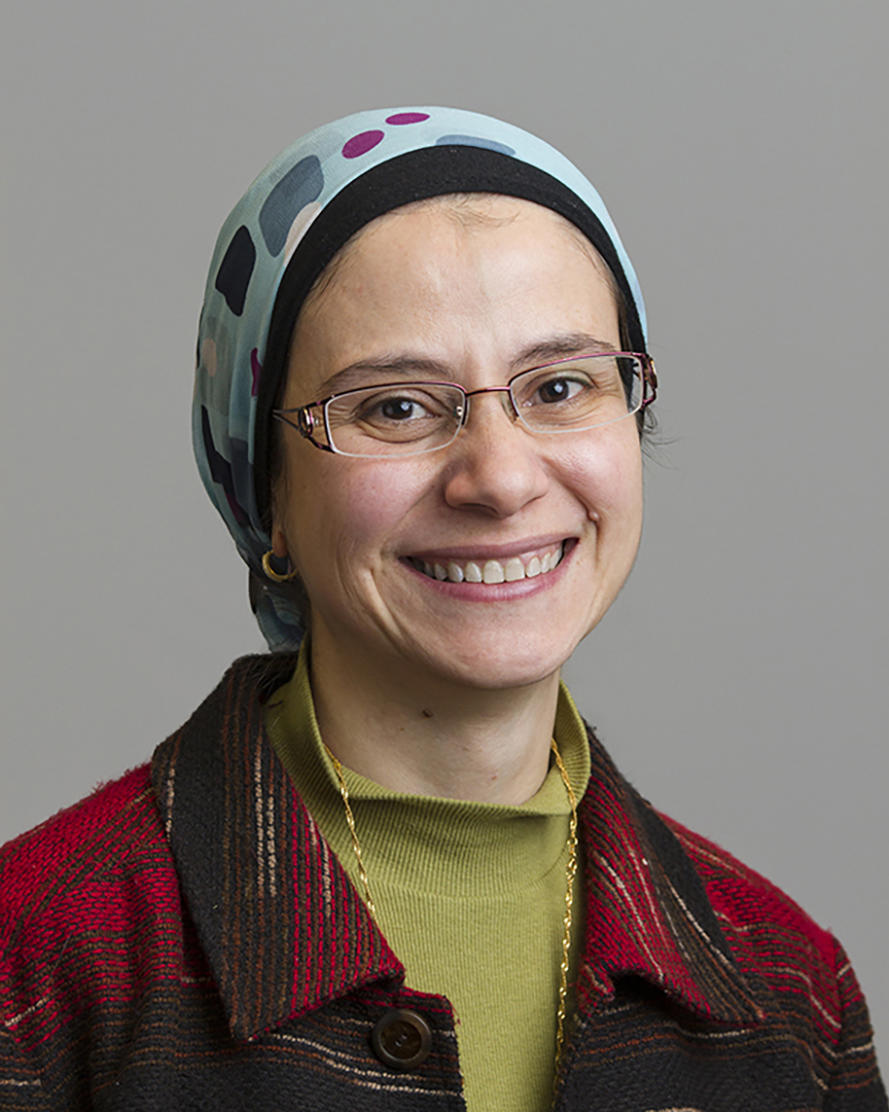
In September 2026, Shahinaz Gadalla, M.D., Ph.D., senior investigator in the Clinical Genetics Branch (CGB), departed DCEG to begin a new position as Principal Scientist at King Faisal Specialist Hospital & Research Centre, in Riyadh. Dr. Gadalla is a physician epidemiologist known for her work on identifying and characterizing individuals at high risk of developing cancer and discovering predictive and prognostic biomarkers that may guide therapeutic decisions for those patients.
Myotonic dystrophy and cancer risk
In 2011, Dr. Gadalla and colleagues were the first to report epidemiological evidence of excess cancer risk in patients with myotonic dystrophy (dystrophia myotonica, DM), establishing it as a new cancer susceptibility syndrome and laying the foundation for the cancer information now included in consensus care guidelines for DM patients. Her subsequent work refined the DM cancer phenotype, distinguishing which cancers are associated with each DM subtype. Using the SEER-Medicare database to assemble the largest cancer-in-DM cohort to date, this work showed that patients with DM diagnosed with cancer nonetheless have better survival outcomes than cancer patients generally. Having largely completed this epidemiological program, she is now transitioning her DM biospecimen collection to collaborators for molecular follow-up into the mechanisms underlying DM-associated cancer susceptibility.
Molecular predictors of outcomes after hematopoietic cell transplantation
Dr. Gadalla built a research program identifying predictive biomarkers of clinical outcomes in recipients of allogeneic hematopoietic cell transplantation (HCT), with an early focus on rare indications, severe aplastic anemia and myelofibrosis, where research had been limited. Through the Transplant Outcomes in Aplastic Anemia (TOAA) project, developed in collaboration with the Center for International Blood and Marrow Transplant Research (CIBMTR) and now the largest resource of its kind, she established donor telomere length and donor epigenetic aging as promising markers for guiding donor selection and predicting transplant complications; the epigenetic aging work in TOAA, first-authored by Dr. Gadalla’s former fellow Dr. Rotana Alsaggaf, received the 2022 George Santos Award for best clinical science article by a new investigator.
Building on TOAA, Dr. Gadalla launched a comparable program in myelofibrosis, leading genomic studies that identified inherited and somatic genetic markers, including DNA repair genes, and associated HCT outcomes, work that has clarified which patients with myelofibrosis are at elevated risk of complications or relapse. Most recently, in partnership with CIBMTR, Dr. Gadalla launched the Genomic Studies in Blood and Marrow Transplantation (GS-BMT) project, the largest genomic investigation in HCT to date, spanning roughly 30,000 recipient-donor pairs and designed to lay the groundwork for genomically guided donor selection and personalized treatment regimens for individuals undergoing HCT.
Dr. Gadalla earned her medical degree from Ain Shams University School of Medicine in Cairo, Egypt, and an M.S. and a Ph.D. in epidemiology from the University of Maryland, Baltimore. She joined CGB as a Cancer Prevention Fellow in 2008, was promoted to staff scientist in 2011, and appointed to tenure track through the NIH Earl Stadtman Investigator program in 2014. Dr. Gadalla was awarded NIH scientific tenure and appointed senior investigator in 2022. In 2025, she received the DCEG Outstanding Mentor Award.